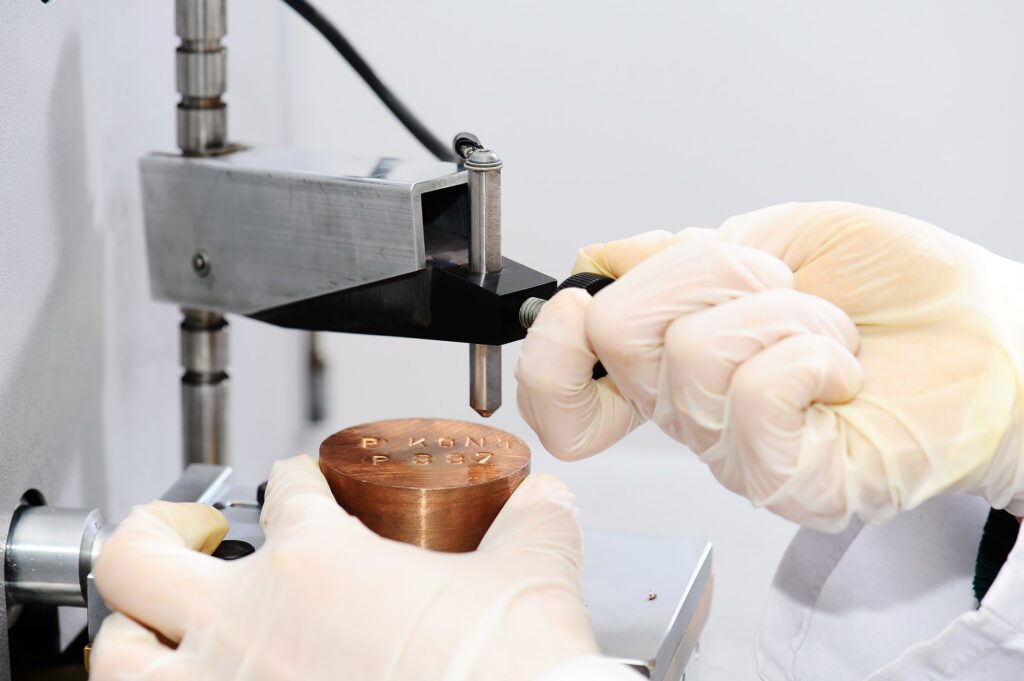
What does ISO 17025 accredited metallurgical testing from Qualimet cover?
Metallurgical testing and material verification need proof from an accredited lab when a material fails inspection or a mill cert doesn’t match reality. Qualimet’s ISO 17025 (6108.01) lab delivers certified, traceable results, verifies imported material and confirms it meets CSA standards and your Building Code requirements before installation. Where a result comes back outside spec, Qualimet’s engineering review supports the decision that follows.
Non-destructive testing Qualimet performs
- Visual Inspection (VT).
- Magnetic Particle Testing (MT, MPT, Magnafluxing).
- Ultrasonic Inspection (UT).
- Corrosion Mapping (Zero Degree Scan).
- Liquid Dye Penetrant Examination (PT).
- In-Situ Metallography.
- Ferrite Testing (Feritscope).
- Coating Condition Assessments (NACE Certified).
Qualimet runs all eight tests on the same equipment your inspector will check against.
Destructive testing Qualimet performs
- Hardness Testing (BHN, HV, RC, HRB).
- Tensile Testing (including elevated temperature).
- Compression Testing.
- Bend Tests.
- Charpy V-Notch Impact Tests.
- Low-Temperature Testing.
- Toughness (Impact) Tests.
- Chemical Analysis.
- Microstructure and Macrostructure Examination.
- Mechanical Testing.
We perform these in the same in-house lab as the non-destructive methods above, so your results come from one facility, not two.
Specialized testing services Qualimet offers
- Welder Testing (ABSA PQ and CWB).
- Weldment Testing.
- Hot Tap Testing and Procedure Development.
- Profile Comparisons.
- Heat Treatment.
- Pressure Tests (‘U’, ‘A’ and ‘B’ Stamp).
Qualimet covers all three categories, non-destructive, destructive and specialized, in the same facility, so your project isn’t split across separate vendors.
An unverified material’s risk doesn’t show up until it’s already installed
A material that fails inspection, or a shipment whose mill certs don’t match reality, creates a problem that’s easy to miss until it’s expensive. The same risk shows up whether a QA/QC manager needs results that pass inspection the first time, or a project engineer needs data fast enough to protect the schedule. It also shows up when a procurement manager needs proof in hand before anything gets installed. Materials are often released before verification. Once that happens, the risk moves into fabrication and installation, where it surfaces as an inspection rejection, a removal and replacement or a schedule delay. The imported-material version is the one that comes up most, usually after a shipment has already been released into production, carrying a risk nobody’s actually confirmed.
Testing aligned to CSA and building code decisions, not just raw data
Plenty of labs will hand you a number and let you figure out what it means. Qualimet aligns every result to the CSA standards and Building Code requirements your project has to answer to, and Qualimet stands behind that result if it’s challenged under audit. Testing happens in Qualimet’s own 4,800-square-foot facility, on Qualimet’s own equipment, under Qualimet’s own quality system. That’s what makes a result defensible under audit.
How a Qualimet metallurgical test becomes a decision
- Test, certified and traceable. Every result, destructive or non-destructive, is built to hold up under audit the first time your inspector reviews it.
- Verify imported material. Qualimet compares your mill cert against the material’s real, tested properties, validated against CSA standards and Building Code requirements, before it enters production.
- Escalate to engineering when results indicate risk. A re-rate, a repair strategy or a fitness-for-service assessment. Qualimet’s materials and metallurgical engineering review supports your accept or reject decision either way.
Qualimet’s credentials
Every certified result Qualimet issues is backed by real credentials, plus ISO 17025 accreditation (6108.01) for our own lab. We’re CWB-certified and hold an ABSA Certificate of Authorization. We’re also an APEGA permit holder, with P.Eng. registrations across six jurisdictions: British Columbia, Alberta, Saskatchewan, Manitoba, Ontario and the Yukon. We run our own in-house testing lab and have operated since 1973.
Verify material before production, not after the rejection
Once material gets verified before it enters production, an inspection rejection stops being a late-stage surprise and a non-conforming result gets a real repair or re-rate path. Qualimet’s testing rolls up into the same Materials Testing system as Material Failure Analysis, so a borderline result and an active failure investigation run through the same engineering review. Related support: Metallurgical Consulting.
Qualimet metallurgical testing questions
Will inspectors and regulators actually accept these results?
Yes. Results come from an ISO 17025 (6108.01) accredited lab, which is exactly the credential inspectors and regulators check for before they’ll sign off. Qualimet builds every result to be certified and traceable, so it holds up if it’s questioned or challenged during an audit. Our accreditation is what your inspector checks for directly before accepting the result.
Do mill certificates confirm a material meets code?
Not on their own. A mill cert tells you what a material is supposed to be, especially with imported material, which isn’t always what it actually measured out to be. We compare the cert against the material’s real, tested properties and validate both against CSA standards and Building Code requirements before it goes into your production. We run that comparison on every imported shipment that comes across your project.
Is metallurgical testing just a commodity service?
Not the way Qualimet runs it. Differences between labs show up exactly where it counts, in audits, in failures and in compliance challenges. We align results to CSA and Building Code decisions for your specific project, and we stand behind them under audit.
What happens if a Qualimet test comes back non-conforming?
It doesn’t automatically mean a write-off. Our materials and metallurgical engineering review supports the accept or reject decision, and looks at whether a re-rate, a repair strategy or a fitness-for-service assessment can save the material. We apply that same review to every non-conforming result on your project.
How does Qualimet’s testing turnaround work against a tight schedule?
Turnaround is built around your production schedule. When a decision is time-sensitive, we loop in our engineering team early, so a delay in results doesn’t turn into a delay in the decision downstream. We treat that early handoff as standard practice on any test tied to your live schedule.
What’s the difference between destructive and non-destructive testing?
Non-destructive testing answers the question without affecting the material’s integrity, which matters when the part in question is staying in service. Destructive testing goes further, confirming exactly how a material performs under load, temperature or impact, the kind of proof a re-rate or fitness-for-service decision actually needs. Qualimet runs both categories in-house, certified to ISO 17025 (6108.01). Our lab covers both, so your project isn’t coordinating two separate vendors for the two categories.
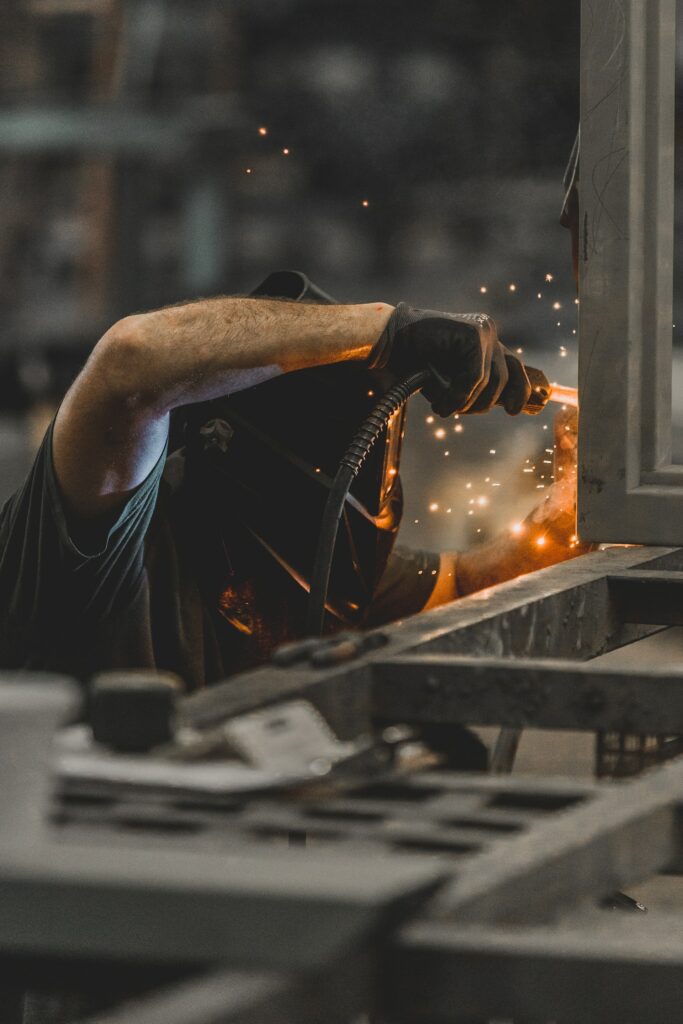
For metallurgical testing services that instill confidence and exceed expectations, contact Qualimet today.
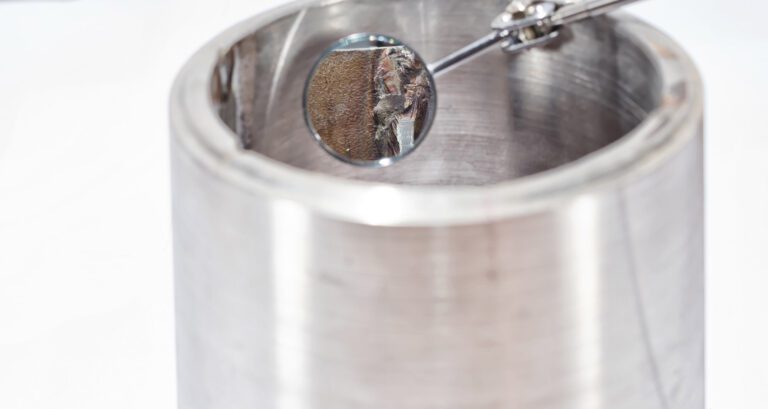
Material Failure Analysis
How Qualimet investigates material failure root cause Material failure root cause analysis only works when the scenario is…
Learn more about Material Failure Analysis ▸